


Stories of Impact: Theresa
May 28, 2021

July 1, 2026
 People often ask us how they can get their kids involved.
 In fact, it was that question that first led to the creation of what is now one of our favorite annual events, Baggin’ for Apples. And while, yes, part of the question is rooted in wondering what they can do directly with the Food Bank, it’s typically coming more from a much bigger place. Parents are really asking how and when to start teaching their little ones about giving back.
It’s usually asked with great intentions and a bit of uncertainty, like maybe there’s a clear starting point or a right age when everything finally clicks.
And if I’m being completely honest, I don’t think it works that way. At least, for my own family, it all happened entirely by accident.
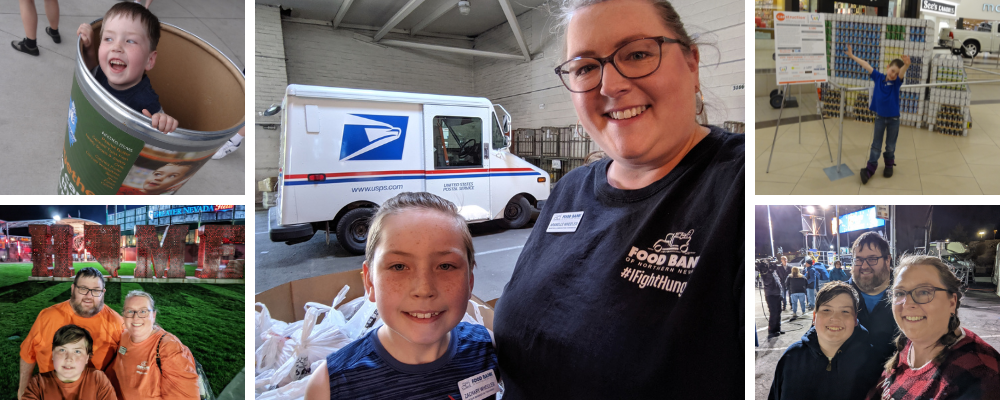
My son, Zachary, was almost three years old when I started working at the Food Bank. Back then, I was just a busy working mom trying to figure out the messy balancing act of work and family life. I was lucky enough that, for us, that sometimes meant being able to bring him along into my work world while I stopped by a distribution or worked one of our events.
I didn’t set out to raise a “Food Bank kid.” It was just life.
At the time, I wasn’t teaching a lesson. I was just living my life, talking through my day, and trying to keep everything moving. I didn’t realize that what felt routine to me was becoming the backdrop for how he learned about care, generosity, and community.
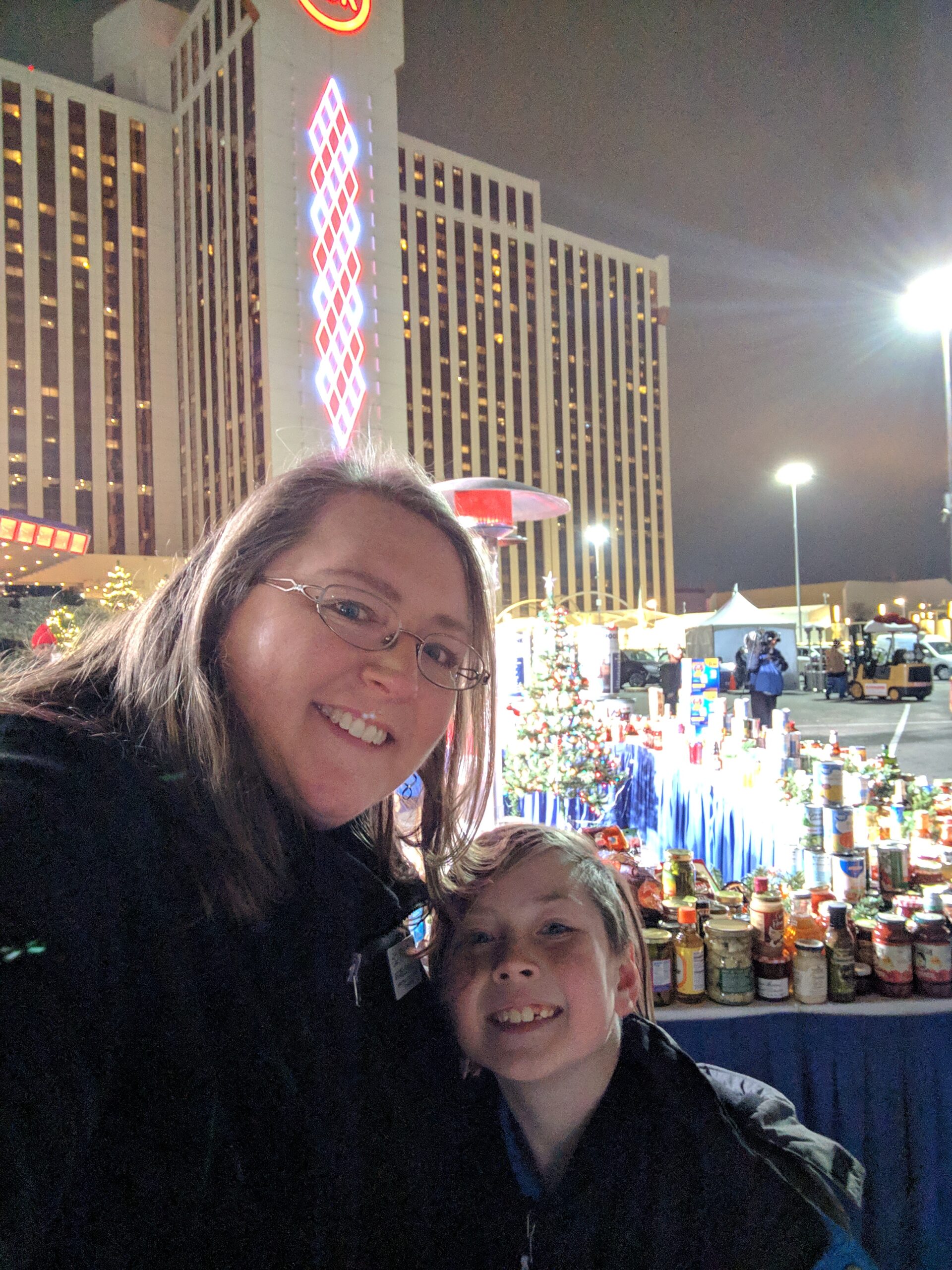 Over the years, one of our favorite family traditions became the annual Share Your Christmas Drive-By Food Drive. When Zachary was little, my husband would bring him toward the end of the event, and he’d insist on staying until the very last bin of donated food had been loaded onto a truck. Afterward, we’d go to dinner together, tired in that full way that comes after a long day of seeing a community show up for one another. I would talk through the moments that stuck with me, the donors who surprised me, the volunteers who went above and beyond, and the stories that stayed with me long after the day ended. Those weren’t formal lessons. They were just what life sounded like in our home.
This work has always been deeply personal to me. I grew up in a family that experienced food insecurity, so conversations about why some families need help were never abstract in our home. They were part of my story long before they became part of my work.
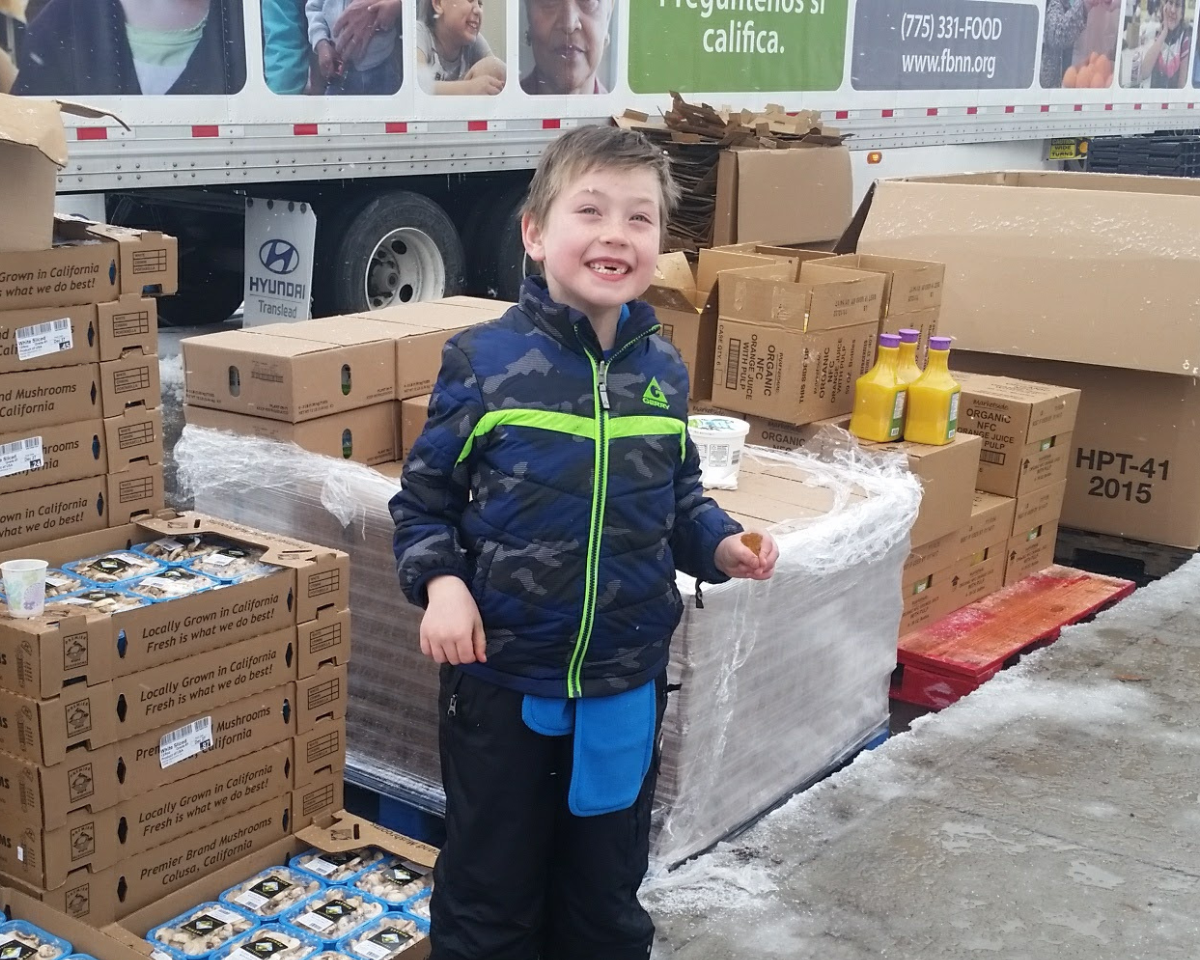
He noticed the kids at our distributions and wondered why some families needed support. We didn’t always have perfect answers, but we tried to be honest in the way kids deserve honesty. Over time, I started to notice something important. He wasn’t just along for the ride anymore.
When his elementary school held its annual food drive, he couldn’t wait to help shop for the items we’d donate, and he loved talking to his classmates about why it mattered. At home, we also built generosity into everyday life. When he started receiving an allowance, we used a simple spend, save, give system. Every few months, he would choose a cause that mattered to him, and his dad and I would match his donation. It was never really about the money. It was about helping him see that even as a kid, he could make an impact on something beyond himself.
Toward the end of this school year, I had a conversation with one of Zachary’s teachers that stayed with me. He mentioned how “in tune” with the community he seems to be and shared that whenever his school is planning school functions, Zachary often asks if there’s a way it can also give back or serve others.
I smiled and thanked him, but I thought about that conversation long after I drove away.
Because somewhere along the way, without either of us naming it, giving back had stopped being something he was learning. It had become something he naturally considered.
Maybe it isn’t about finding the perfect volunteer opportunity or waiting for the perfect age. Maybe it’s about letting kids grow up close enough to see what care looks like in real life. Letting them come along when you can. Including them in conversations about causes that matter to you. Letting them ask questions and doing your best to answer them honestly. Giving them small, real opportunities to participate in ways that make sense for their age and curiosity.
Because kids are always noticing more than we think they are. They notice what we prioritize. They notice how we talk about other people. They notice where we show up. And those small, ordinary things end up becoming the foundation for how they understand the world.
When I look back over the last fourteen years, I don’t think there was ever one defining moment that taught Zachary how to care. It was the accumulation of everything in between. The repetition of being included. The normalization of showing up for others. The quiet understanding that community isn’t something you observe from the outside, it’s something you become part of.
And I see that same pattern everywhere I look in our community.
Now he’s about to start his junior year of high school, and he’s officially taller than me, which still catches me off guard sometimes. He’s finally old enough to volunteer at Share Your Christmas in a more official way, and every year he heads there straight from school and stays until the last semi-truck is loaded. He comes home with his own stories from that day now too, moments he talks about at the dinner table that remind me this isn’t something I once brought him into, it’s something he’s fully part of now. And he also has everyday experiences outside of that event that are quietly shaping how he sees the world in ways I never could have planned, or taught directly, even if I tried.
One of those early moments in our own family happened when Zachary was seven years old and decided he wanted to host a lemonade stand after seeing older neighborhood kids doing the same.
At the time, it felt like a simple weekend idea. But looking back now, I realize it was one of the first moments he understood something important – that caring out loud can move people to act.
I didn’t know it then, but that afternoon would stay with him. And it would eventually grow into something much bigger.